

How to Buy Gold Coins: The Complete Guide From 25 Years in the Business
Key Takeaways Choosing where you buy matters more than what you buy — reputable sources are non-negotiable for authenticity and fair pricing. Understanding the difference between spot price, premium, and total cost is the single most important skill for buying...

Key Takeaways
- Choosing where you buy matters more than what you buy — reputable sources are non-negotiable for authenticity and fair pricing.
- Understanding the difference between spot price, premium, and total cost is the single most important skill for buying gold intelligently.
- Gold coins come in three categories — bullion, proof, and numismatic — and each serves a different purpose in your portfolio.
- Scams are real and preventable. Third-party grading from PCGS or NGC is your first line of defense.
- A strong buyback policy is just as important as the purchase price — liquidity is what separates an investment from a paperweight.
I’ve been in the gold coin business for over 25 years. I’ve helped first-time buyers pick up their first American Gold Eagle and guided high-net-worth collectors through six-figure acquisitions. The one thing I tell every single person who walks through our door or picks up the phone: the best way to buy gold coins isn’t about finding the cheapest price. It’s about building a strategy that protects your wealth and gives you confidence in every purchase.
This guide is everything I know about buying gold coins, distilled into one place. Whether you’re buying your first ounce or adding to a serious collection, these are the principles that have kept my clients — and me — on the right side of every transaction.

Why Gold Coins in 2026?
Gold isn’t a speculation. It’s a decision. When markets wobble, stocks crash, or inflation eats away at savings, gold holds its ground. That’s not theory — I’ve watched it happen through every economic cycle of the last quarter century.
Here’s why gold coins specifically deserve a place in your portfolio:
- Inflation protection. Gold thrives when fiat currencies weaken. It’s your armor against rising costs.
- Portfolio diversification. Gold coins have low correlation with stocks and bonds, stabilizing your overall wealth.
- Global liquidity. High-grade coins from sovereign mints are recognized and traded worldwide. You can sell a Gold Eagle in Tokyo as easily as in Milwaukee.
- Tangible ownership. Unlike ETFs or paper gold, a coin in your hand isn’t subject to counterparty risk. No corporation, no custodian, no fine print.
- Legacy value. A curated collection isn’t just an asset — it’s something you hand down to your children and grandchildren.
At Global Coin, we allocate a portion of every client consultation to understanding why they’re buying. That purpose shapes every recommendation we make.
The Three Categories of Gold Coins
Not all gold coins are created equal. Before you buy anything, you need to understand what you’re actually looking at.
1. Bullion Coins — The Liquid Backbone

Bullion coins are valued primarily for their gold content. They’re struck by sovereign mints — the U.S. Mint, Royal Canadian Mint, Perth Mint — in standardized weights (1 oz, 1/2 oz, 1/4 oz, 1/10 oz). Their price tracks closely to the spot price of gold, making them the most liquid and straightforward way to own physical gold.
Top bullion coins: American Gold Eagle, Canadian Gold Maple Leaf, South African Krugerrand, Austrian Gold Philharmonic, Australian Gold Kangaroo.
Best for: Investors focused on wealth preservation, liquidity, and portfolio diversification.
2. Proof Coins — The Collector’s Pride

Proof coins are struck with polished dies on specially prepared blanks, producing a mirror-like finish. They’re typically limited-mintage and carry premiums of 15–30% over spot. Grades of PF69 or PF70 from PCGS or NGC command top dollar and hold value exceptionally well.
Best for: Collectors and investors who value artistry, scarcity, and long-term appreciation.
3. Modern Numismatic Masterpieces — The Elite Edge

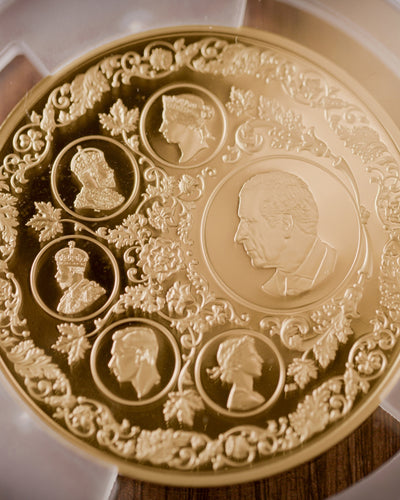
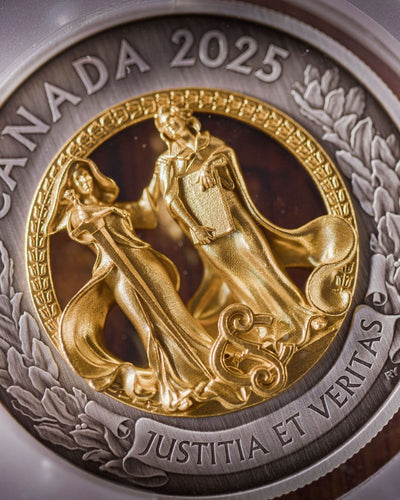
These are low-mintage, high-grade coins with historical or artistic significance. They blend gold’s intrinsic value with scarcity-driven premiums and often outperform bullion at auction. I steer my high-net-worth clients toward these because they deliver gold’s stability plus the compounding power of rarity and storytelling.
Best for: Sophisticated collectors building generational wealth.
My advice: don’t pick just one category. A balanced portfolio mixes the liquidity of bullion with the appreciation potential of proof and numismatic pieces. Wondering whether gold bars or coins are the right choice for you? The answer almost always depends on your liquidity needs and investment horizon.

Where to Buy Gold Coins
I’ve bought gold from every source imaginable — online platforms, local shops, government mints, auctions, and peer-to-peer. Each has its place, and each has its pitfalls.
Reputable Online Dealers
Online dealers offer the widest selection and often the most competitive premiums. The convenience is unbeatable — you can compare prices across multiple dealers in minutes, read verified reviews, and have coins shipped insured to your door.
What to look for:
- Transparent pricing that clearly separates spot price from premium
- Secure payment processing (credit card, wire transfer, or ACH)
- Clear return and buyback policies
- Third-party reviews on Trustpilot, BBB, or Google
- PCGS or NGC certification on graded coins
What to avoid: Any dealer who won’t clearly state their premium over spot. If the all-in price is buried or vague, walk away.
Local Coin Shops
Nothing replaces the hands-on experience of inspecting a coin in person. You can examine the strike quality, ask the dealer questions about provenance, and walk out with your purchase the same day. Local shops also build relationships — and in this business, relationships matter.
The trade-off: inventory is usually smaller and prices can run 5–15% higher than online. I think of local shops as the place to buy specific pieces you want to inspect, not the place to stack bullion on price alone.
Government Mints
When I want guaranteed authenticity, I go straight to the source. The U.S. Mint, Royal Canadian Mint, Royal Mint, and Perth Mint all sell directly to consumers. Their coins come with the full weight and purity guarantee of their respective governments.
The downside: selection is limited to current releases, and you won’t find secondary-market bargains. But for new releases and commemoratives, buying direct from the mint is unbeatable.
Auctions and Coin Shows
For rare pieces, auctions and coin shows are where the action is. I’ve found gems at Heritage Auctions and at regional shows that I couldn’t have found anywhere else. But this arena requires homework — know your comparable sales, set a hard maximum bid, and factor in buyer’s premiums (typically 15–20%).
My rule: Never bid on impulse. Research comparable sales on PCGS CoinFacts before you raise your paddle.
Peer-to-Peer Marketplaces
eBay, Craigslist, Facebook Marketplace — these can offer deals, but the risk profile is significantly higher. I only buy P2P when the seller has strong verified reviews and the coin comes with third-party certification. No certification, no deal. Period.

Understanding Gold Coin Pricing
This is where most buyers get tripped up. The price of a gold coin is not just “the price of gold.” Here’s what actually makes up the number on the tag:
Spot Price
The current market price per troy ounce of gold, set by global commodity exchanges. This changes constantly throughout the trading day. I check it every morning before I do anything else — it’s the foundation of every transaction. Understanding gold spot price is the single most important concept for any buyer.
Premium
The markup above spot price that covers the mint’s production cost, the dealer’s margin, and any scarcity or collectibility factors. For standard bullion, expect 5–10% over spot. For proof coins, 15–30%. For rare numismatic pieces, the sky’s the limit.
Total Cost
Spot price + premium + shipping and insurance = what you actually pay. Always compare the total cost across dealers, not just the sticker price. Some dealers advertise razor-thin premiums but tack on shipping and handling fees that wipe out the savings.
My approach: I compare at least three dealers before any purchase. The spread between the best and worst price for the same coin can be 8–12%. That’s real money.
Purity and Weight
I only deal in coins that are 22-karat (.9167) or 24-karat (.9999) gold. The standard weight for investment coins is 1 troy ounce (31.1 grams). Fractional sizes — 1/2 oz, 1/4 oz, 1/10 oz — carry higher per-ounce premiums but offer flexibility and a lower entry point.
For the 22-karat coins like the American Gold Eagle, the coin actually weighs more than an ounce because silver and copper are added for durability — but it still contains exactly 1 oz of pure gold.
How to Avoid Gold Coin Scams
I’ve seen every trick in the book. Counterfeits, bait-and-switch schemes, fake certifications, and high-pressure sales tactics. Here’s how to protect yourself:
Counterfeit Coins
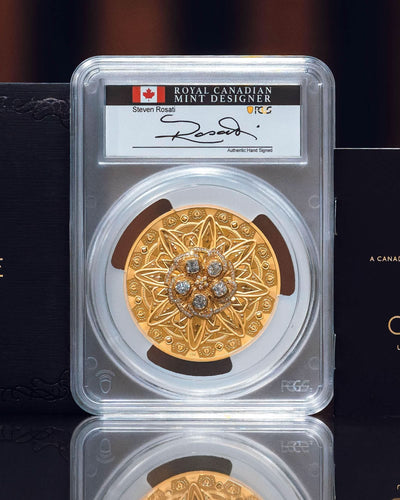
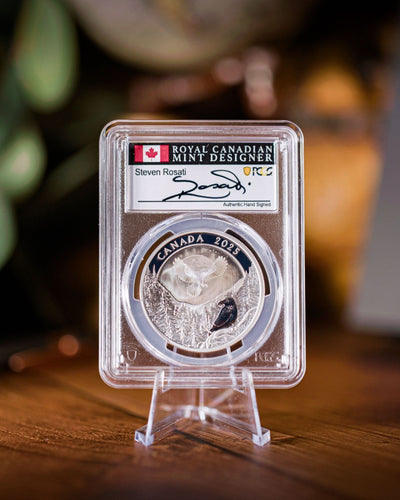
The best defense is third-party grading. Coins certified by PCGS or NGC have been authenticated by experts and sealed in tamper-evident holders. For raw (ungraded) coins, I run three quick tests:
- Magnet test — Gold is not magnetic. If the coin sticks to a magnet, it’s fake.
- Ping test — A genuine gold coin produces a clear, high-pitched ring when struck. A fake sounds dull.
- Dimensions — Compare weight and diameter against published mint specifications. Even a fraction of a millimeter off is a red flag.
Bait-and-Switch
A dealer advertises a popular coin at a great price, then when you call, that coin is “just sold out” and they try to steer you toward something more expensive. My counter: know exactly what you want before you call, and if the coin you inquired about is suddenly “unavailable,” hang up.
Fake Certifications
Counterfeit PCGS and NGC slabs exist. Always verify the certification number on PCGS CoinFacts or NGC’s verification tool. If the cert number doesn’t match the coin described, it’s a fake.
High-Pressure Sales
Any dealer who creates artificial urgency — “this deal expires in 10 minutes,” “we only have three left,” “gold is about to spike” — is someone I’d never do business with. A reputable dealer gives you time to think and never makes you feel rushed. That’s how we operate at Global Coin.
Tips for Getting the Best Prices
Compare Across Multiple Dealers
I always check at least three sources. Price comparison tools and aggregators can reveal spreads you’d never notice looking at a single dealer’s site.
Buy in Volume
Most reputable dealers offer tiered pricing — the more you buy, the lower the per-coin premium. If you’re planning to invest in multiple coins, buying them together can save you a meaningful percentage.
Time Your Purchase
While trying to time the gold market perfectly is a fool’s errand, there are smarter moments to buy. When spot is pulling back from recent highs, that’s often a good entry point. Dollar-cost averaging (buying a fixed amount at regular intervals) is another solid strategy that removes the emotion from timing.
Negotiate Buyback Terms Upfront
Before you buy, ask: “What’s your buyback policy?” A dealer who offers strong buyback terms (typically within 1–2% of spot) is telling you they stand behind what they sell. If a dealer gets cagey about buyback, that’s all you need to know.

Choosing the Right Coins for Your Goals
| Goal | Best Coin Type | Examples |
|---|---|---|
| Wealth preservation | Bullion (1 oz) | Gold Eagle, Maple Leaf, Krugerrand |
| Portfolio entry point | Fractional bullion | 1/10 oz Gold Eagle, 1/4 oz Maple Leaf |
| Long-term appreciation | Proof / numismatic | Proof Gold Eagle, commemorative gold |
| IRA-eligible investment | Bullion (.995+ purity) | Gold Eagle, Gold Buffalo, Maple Leaf |
| Generational legacy | Numismatic masterpieces | Low-mintage proofs, historically significant pieces |
For most investors getting started, I recommend the American Gold Eagle. It’s U.S. government-backed, globally recognized, highly liquid, and available in fractional sizes. It’s the most versatile gold coin in the world, and it’s the coin I recommend more than any other.

Gold Coins and IRAs
Gold coins can be held in a Precious Metals IRA (also called a Gold IRA), giving you the tax advantages of a retirement account combined with the stability of physical gold. Not all coins qualify — the IRS requires a minimum fineness of .995 for gold.
IRA-eligible gold coins include:
- American Gold Eagle (exempt from the .995 rule by statute)
- American Gold Buffalo (.9999)
- Canadian Gold Maple Leaf (.9999)
- Australian Gold Kangaroo (.9999)
- Austrian Gold Philharmonic (.9999)
Work with a custodian who specializes in precious metals IRAs and don’t cut corners — choose a custodian with a long track record and transparent fee structure.

My Gold Coin Buying Checklist
Every coin I help a client purchase goes through this process. No exceptions.
- Authenticity — PCGS or NGC graded, from a recognized mint. Ungraded coins from unknown sources are a hard pass.
- Purity & weight — Verify against mint specifications. 22K (.9167) or 24K (.9999) only.
- Pricing transparency — Spot price, premium, and total cost clearly stated. Hidden fees? I’m out.
- Dealer reputation — ANA membership, BBB accreditation, verified reviews, and a track record you can trace.
- Buyback policy — Can I sell this back easily? Coins with strong resale markets (MS69–70, PF69–70 from top mints) are what I target.
- Liquidity — Will this coin be easy to sell in 5, 10, 20 years? Sovereign-mint bullion coins always clear this bar.
- Story & narrative — For numismatic pieces, a compelling story (historical event, limited release, cultural significance) drives long-term value.
Summary
The best way to buy gold coins comes down to three things: trusted sources, educated decisions, and a strategy that matches your goals. I’ve spent 25 years refining this approach, and every principle in this guide comes from real experience — wins I’ve repeated and mistakes I’ve helped others avoid.
Gold isn’t a get-rich-quick play. It’s a long-term commitment to preserving wealth, building something tangible, and creating a legacy that outlasts market cycles. Start with the fundamentals, buy from people you trust, and let time do the heavy lifting.
If you’re ready to start or have questions about building your gold portfolio, reach out to our team at Global Coin. We’ve been doing this a long time, and we’d love to help.
Frequently Asked Questions
What is the best way to buy gold coins for beginners?
Start with a well-known bullion coin like the American Gold Eagle or Canadian Gold Maple Leaf from a reputable dealer. Begin with a fractional size (1/4 oz or 1/10 oz) to keep your initial investment manageable. Focus on understanding spot price and premium before you buy, and always compare pricing (including shipping and insurance) across at least three sources. Avoid any dealer who won’t clearly break down their premium over spot price.
How much premium should I pay over spot price for gold coins?
For standard 1 oz bullion coins (Gold Eagle, Maple Leaf, Krugerrand), expect premiums of 5–10% over spot. Fractional coins (1/4 oz, 1/10 oz) carry higher per-ounce premiums due to production costs. Proof and numismatic coins typically command 15–30% or more, depending on mintage and grade. Always compare the total cost across multiple dealers — spreads of 8–12% are common.
Are gold coins a good investment in 2026?
Gold has consistently served as a hedge against inflation, currency devaluation, and market volatility over decades. In 2026, with ongoing geopolitical uncertainty and central banks continuing to accumulate gold at record levels, the fundamental case for gold remains strong. Gold coins specifically offer the advantage of physical ownership, global liquidity, and — for numismatic pieces — the potential for appreciation beyond the metal’s intrinsic value.
Gold coins vs. gold bars — which is better?
It depends on your goals. Gold bars generally carry lower premiums and are better suited for large-scale bullion accumulation. Gold coins offer greater liquidity, legal tender status, and for numismatic coins, appreciation potential beyond the metal value. For most individual investors, coins offer the better balance of flexibility and long-term upside.
Related Articles
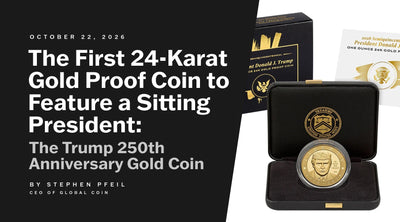
The U.S. Mint's first 24-karat gold proof coin to feature a sitting president: one ounce of pure ...
Discover More
The Trump 250th Dollar: Why This Coin Is Different
I’m Stephen Pfeil, founder of Global Coin. There are coins you collect, and there are coins peopl...
Discover More
Midterms and Metal: What Gold Has Done Around U.S. Elections Since 2000
I’m Stephen Pfeil, founder of Global Coin. Every two years, my phone starts ringing the same way....
Discover More

Leave a comment
This site is protected by hCaptcha and the hCaptcha Privacy Policy and Terms of Service apply.